
In a modern workplace, a reported injury should not be the first indication that a hazard needs to be addressed. Over recent years, organisations have become increasingly focused on workplace safety, incident reporting and the identification of hazards and near misses. This has helped employers learn from incidents and improve working practices across industry. But reporting an incident is only part of the process. The ultimate objective should be to identify the hazard before someone gets hurt.
Hot pipework, valves, flanges, heat exchangers and other process equipment can present a persistent risk to employees, contractors and maintenance personnel. In many facilities, these surfaces are simply accepted as part of the process: "it's always been hot."
But "it's always been hot" is not a safety control.
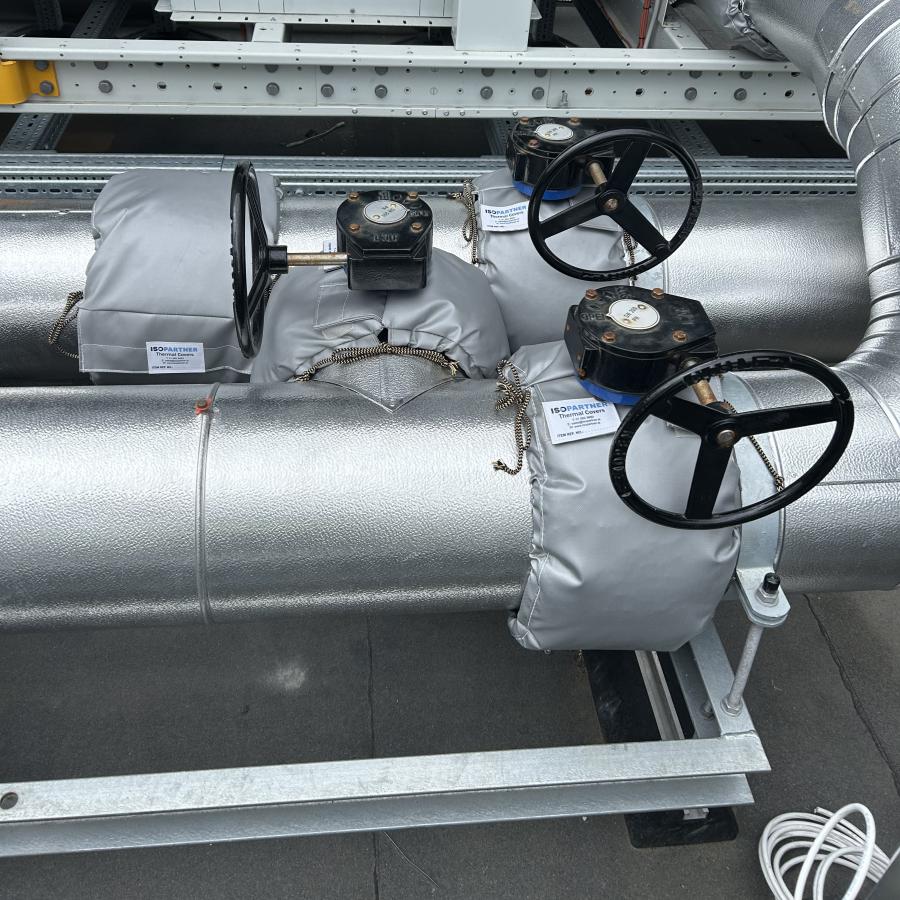
From Reporting Incidents to Preventing Them
Workplace injury statistics provide an important measure of safety performance. They tell us where incidents are occurring and help organisations understand where improvements are required. However, statistics cannot tell us how many injuries were prevented because a hazard was identified and effectively controlled before an incident occurred.
A near miss that results in corrective action is a success, not a failure. A hazard identified during a risk assessment and eliminated before an employee is exposed is another success that will never appear in an injury statistic. This is particularly relevant to hot surfaces.
A worker does not need to suffer a serious injury for an exposed valve or pipe to represent a genuine hazard. A momentary contact during routine maintenance, an unexpected movement while reaching around equipment, or simply working in a confined or busy area can result in accidental contact with a hot surface.
The question should therefore not be "Have we had a burn?" but "Could someone be burned here?"
That change in perspective moves safety from reacting to incidents towards actively preventing them.
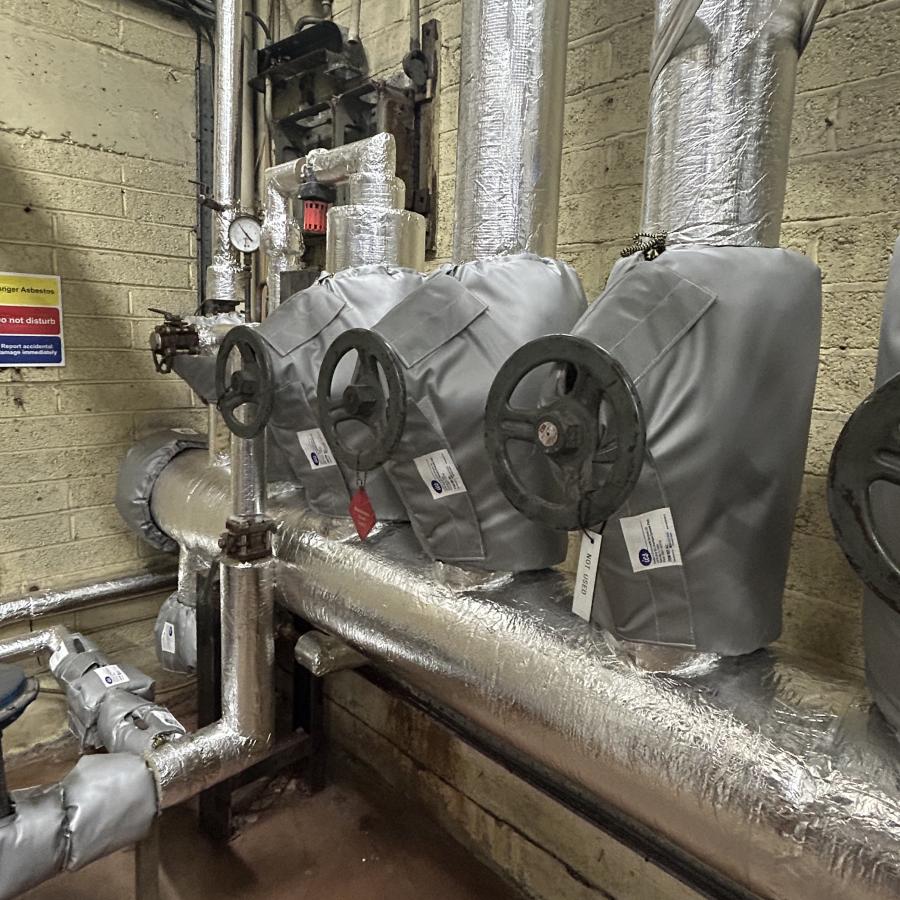
The Challenge of Hot Pipework and Valves
Many industrial facilities contain equipment operating at elevated temperatures, particularly within steam systems, heating networks and process plants. Straight sections of pipework are commonly insulated, but valves, flanges, strainers, pumps and other components can remain exposed.
There is a practical reason for this. These components often have complex shapes and require regular access for inspection, operation and maintenance.
Manual isolation valves and distribution manifolds can be particularly difficult to insulate. Their combination of handles, bodies, connections, flanges and uneven surfaces makes conventional insulation challenging. As a result, these areas can become the gaps in an otherwise well-insulated system.
For the people working around them, however, the risk remains.
Maintenance technicians, operators and contractors may need to work within proximity to these components during routine operations, inspections, shutdowns and emergency maintenance. Even where hazards are identified and signage is provided, relying solely on awareness and behaviour leaves the possibility of accidental contact.
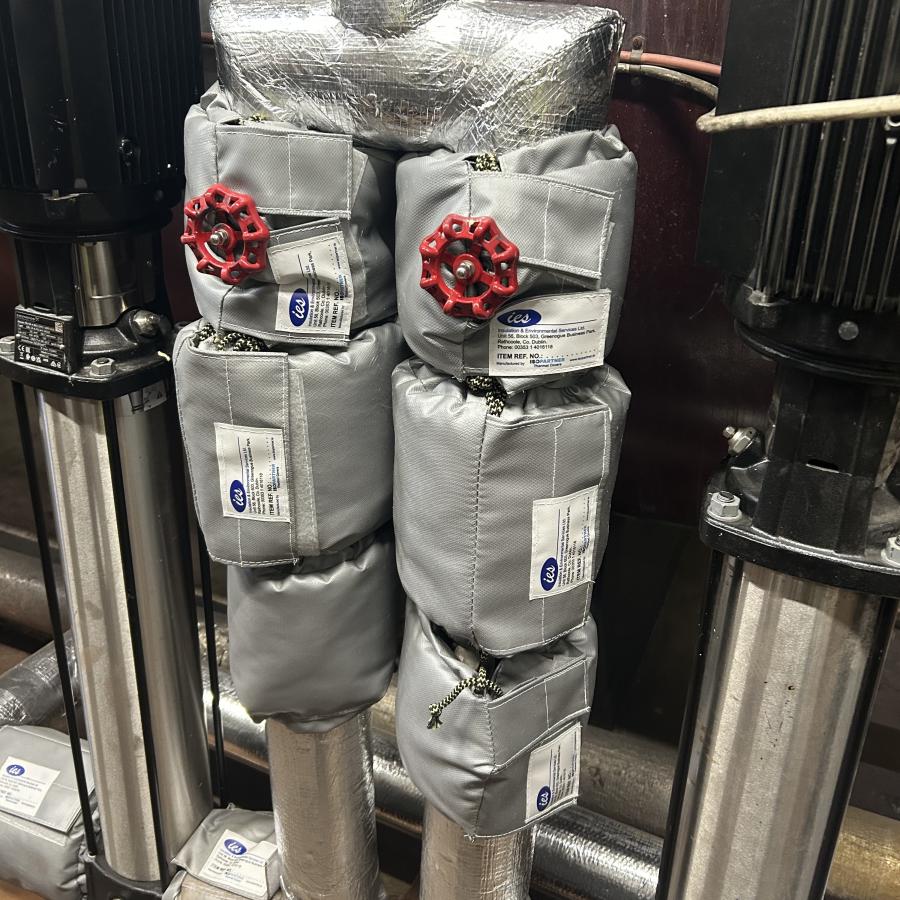
Turning an Identified Hazard into a Controlled Hazard
This is where made-to-measure thermal covers can provide a practical engineering solution. Rather than relying on people to remember which surfaces hot, thermal covers are create a physical barrier between the individual and the hot component. Properly designed covers can significantly reduce accessible surface temperatures and help minimise the likelihood and severity of accidental contact burns. This is particularly valuable on components that are difficult to insulate using conventional methods.
Because each cover is manufactured to the dimensions, configured to the individual component and labelled, complex valves, flanges, manifolds, pumps and other equipment can be insulated while retaining access where it is required.
The objective is simple:
- Identify the hot surface. Control the hazard. Prevent the incident.
- Removable Protection Without Compromising Maintenance
One of the challenges with insulating valves and other maintenance-critical components is accessibility is that equipment still needs to be inspected, operated and maintained. A permanent insulation system can make access difficult or result in insulation being removed and never properly replaced. This is where removable thermal covers provide a different approach. They can be removed when access is required and reinstalled once the work is complete. This allows the equipment to remain accessible without leaving the underlying hot surface permanently exposed.
For facilities with large numbers of valves, flanges and other removable components, this provides an opportunity to close some of the gaps that can exist within an otherwise comprehensive insulation system.
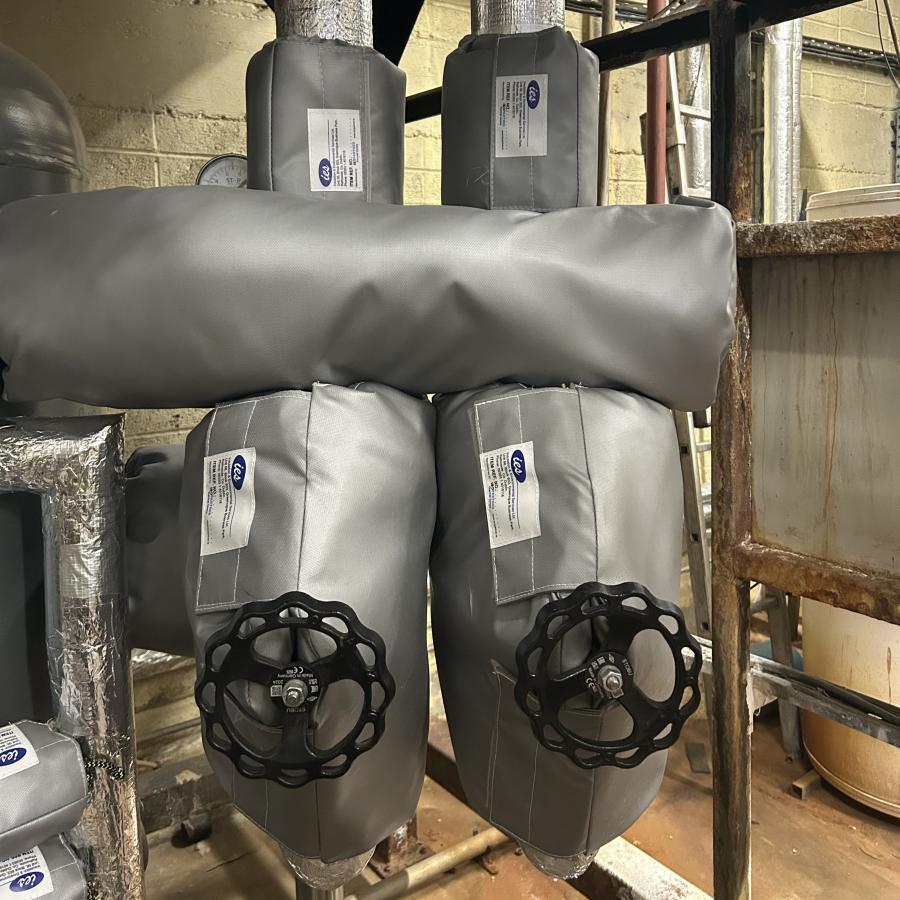
Safety and Energy Efficiency in One Solution
Personnel protection is an important reason to install thermal covers, but it is not the only benefit. The same insulation that helps reduce the temperature of an accessible surface also helps retain heat within the process. Reducing heat loss from valves, flanges, pumps and other components can improve thermal efficiency and reduce the energy required to maintain operating temperatures.
This creates an important opportunity for organisations looking at both safety and energy efficiency. A thermal cover can potentially deliver two benefits from the same intervention: protect the person and retain the heat.
Reduced heat loss can contribute to lower energy consumption and associated emissions, supporting wider energy-efficiency and sustainability objectives.
Don't Wait for the Burn
Improving workplace safety does not necessarily mean waiting for injury statistics to tell us where the next problem lies. Organisations are looking beyond simply reporting incidents towards actively preventing them and insulating the hot surface before it causes an injury is a simple but powerful place to start.
With made-to-measure thermal covers from ISOPARTNER, complex valves, pipework, flanges and process equipment can be insulated with solutions designed around the equipment, the operating conditions and the requirements of the people working around it.
Don't wait for the burn. Identify it. Insulate it. Prevent it.